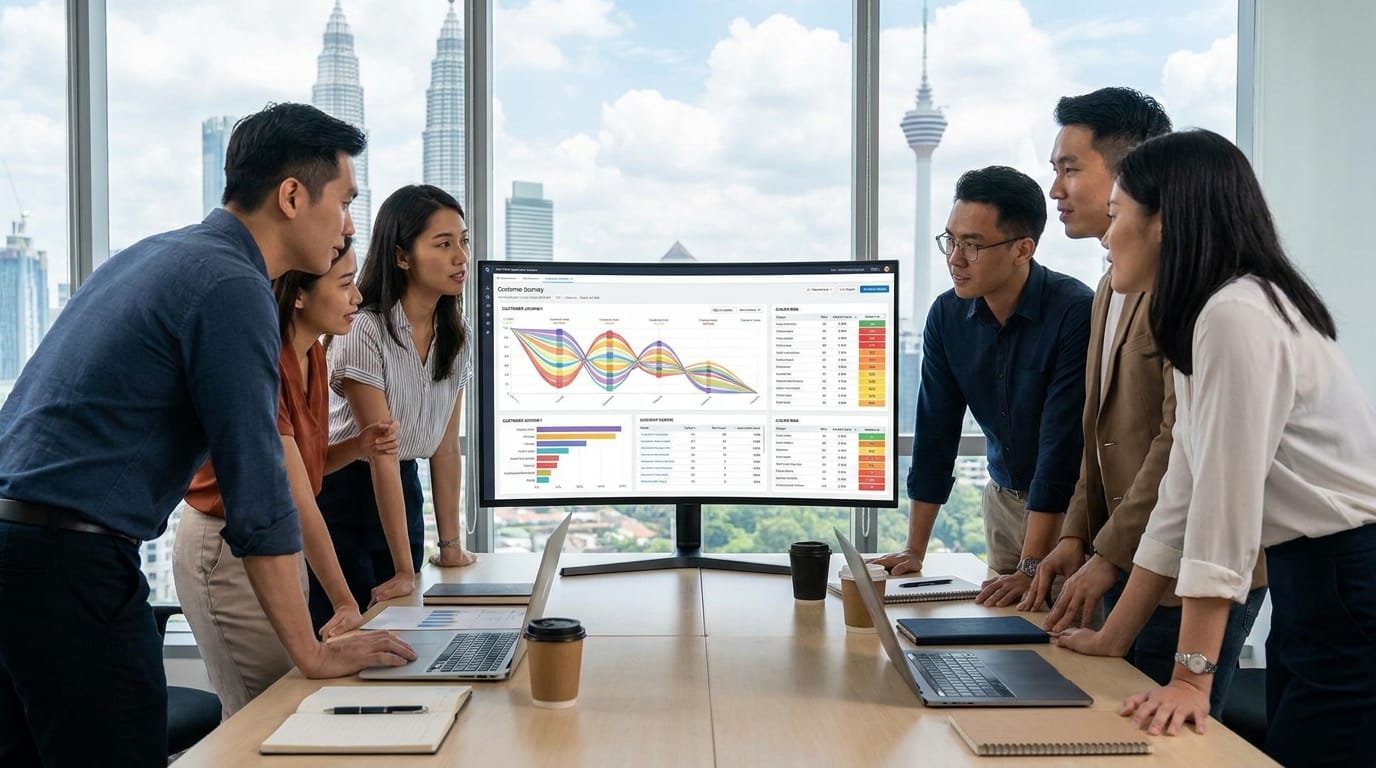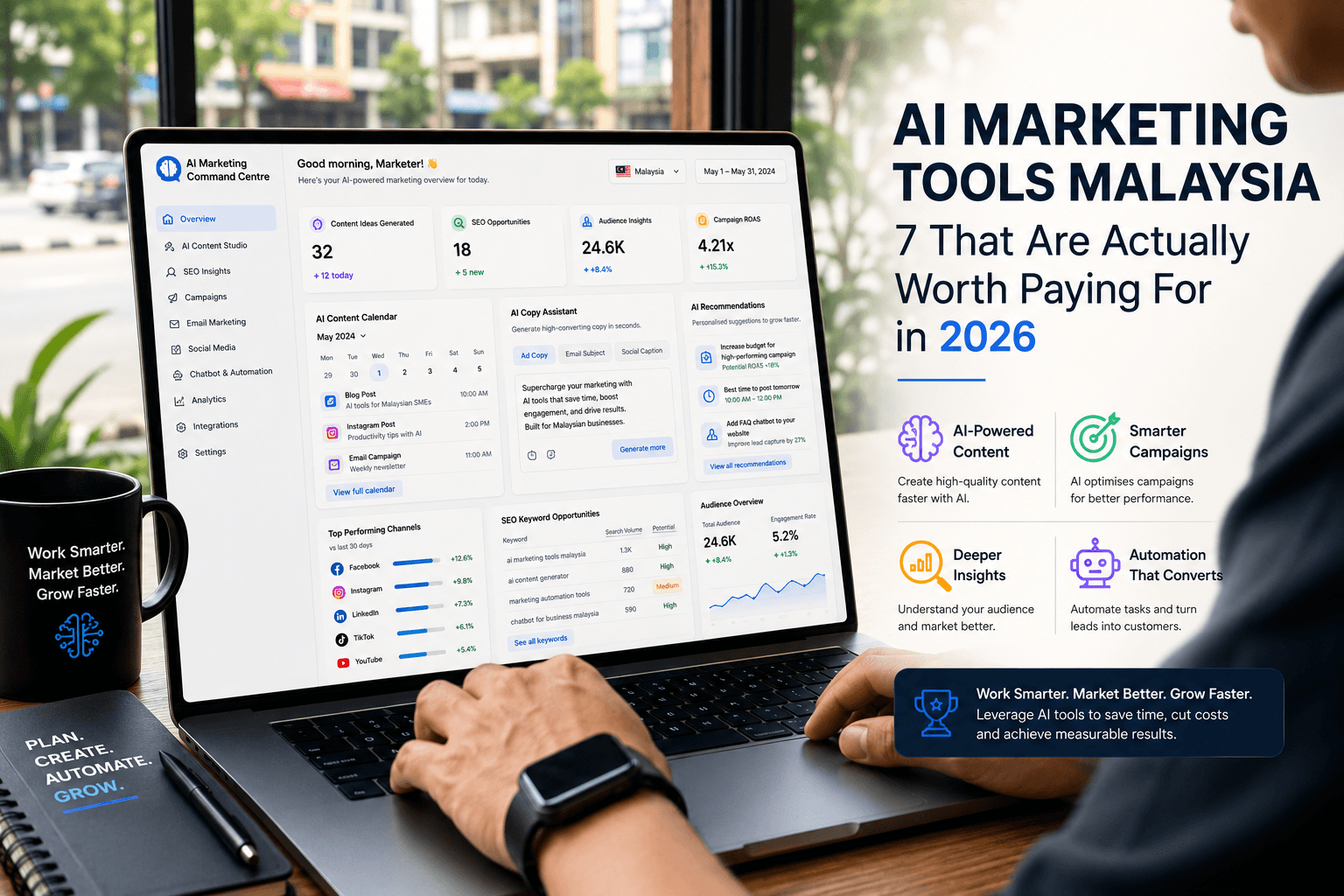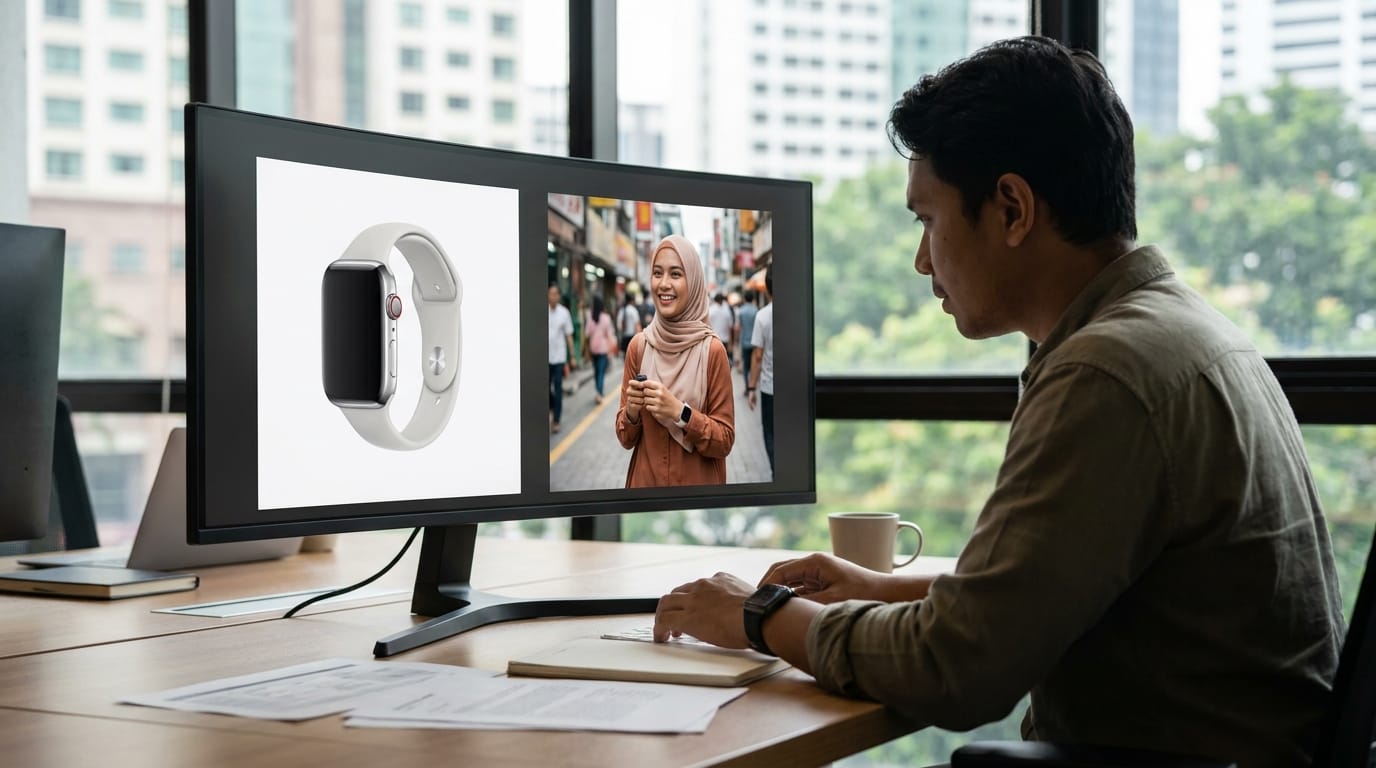
- Performance is Perception-Driven: AI-generated ads in Malaysia can match the click-through rates (CTR) of human creative, but only when audiences perceive them as human-made. Obvious AI visuals are penalised.
- Hybrid Outperforms Pure AI: The most effective strategy is not replacement but augmentation. AI used to modify or enhance a winning human creative outperforms both pure AI and pure human ads.
- Context is Critical: AI excels at creating static product images and simple banners where speed and cost are priorities. It fails in areas requiring cultural nuance, emotional connection, and authenticity, like lifestyle or food photography.
- Disclosure is Coming: Meta’s 2026 AI disclosure requirement will force transparency, making it crucial for Malaysian advertisers to understand how audiences react to explicitly labelled AI content.
AI-generated ads in Malaysia show comparable performance to human-made creative in terms of click-through rates, but this parity disappears the moment consumers suspect AI involvement. When an ad looks visibly AI-generated, its performance drops significantly as Malaysian audiences penalise the perceived artificiality. The data suggests the debate is not about AI versus human, but about how to blend them effectively.
The promise of generating ad creative faster and cheaper with tools like Midjourney and Canva AI is compelling for SMEs. 3 billion in 2024, is heavily driven by small businesses needing efficient marketing. However, efficiency cannot come at the cost of connection.
The real question is not if businesses should use AI, but where and how to deploy it without sacrificing the trust of local consumers.
The Core Performance Question: AI vs. Human
Initial data shows a surprisingly level playing field. A large-scale analysis found that AI-generated ads achieved a 0.76% CTR, statistically similar to the 0.65% CTR for human-created ads, with no negative impact on downstream conversions. This suggests that, at a surface level, the technology can produce effective direct-response creative.
The critical variable, however, is perception. In the same study, nearly half (48%) of the AI-generated ads were perceived by users as human-made. These “stealth AI” ads significantly outperformed both human-created ads and ads that were obviously machine-generated.
This reveals the core challenge: performance hinges on an ad’s ability to pass as authentic.
When AI Creative Wins (and Why)
AI is not a universal solution. Its strength lies in specific, high-volume, low-nuance tasks. For Malaysian businesses, it offers a clear advantage in certain areas by reducing production costs by up to 40% and enabling much faster campaign iteration.
| Creative Category | AI Wins? | Reason for Performance |
|---|---|---|
| Static Product Images | Yes | Delivers high detail and clean aesthetics without cultural context. |
| Background Replacement | Yes | A technical task that automates a time-consuming editing process. |
| Simple Promotional Banners | Yes | Excellent for template-driven designs and rapid A/B testing of offers. |
| Lifestyle Photography | No | Fails to capture authentic cultural cues and human emotion. |
| Food Photography | No | Struggles with realistic texture, which is critical for trust in F&B. |
| Emotion-Driven Storytelling | No | Lacks the nuance for complex narratives and genuine facial expressions. |
Where Human Touch Remains Critical
While AI can replicate a product on a white background, it struggles to replicate a feeling. This is especially true in a market that values authenticity. A 2025 survey by MDEC found that 78% of Malaysian consumers prefer advertising with visible human faces.
Ads that lack clear, relatable faces are perceived as less trustworthy.
This is where purely AI-generated ads often fail. They struggle with:
- Cultural Nuance: Creating scenes that reflect genuine Malaysian life, from festive celebrations to daily interactions.
- Authentic Emotion: Generating facial expressions that convey trust, happiness, or urgency without falling into the “uncanny valley.”
- Product Realism: For F&B or fashion, AI can miss the subtle textures and details that convince a customer of a product’s quality.
The Hybrid Model: AI-Assisted Creative
The most powerful approach is not a complete handover to AI, but a partnership. Data shows that human-generated creatives outperform AI-generated creatives 68.3% of the time in a direct comparison. However, when AI is used to modify or create variations of a winning human creative, that new hybrid asset wins 75.7% of the time.
This “human-in-the-loop” model is the strategic sweet spot. It allows marketers to use AI for what it does best (scale, variation, and speed) while relying on human creativity for the initial concept, emotional core, and final quality control. Malaysia Airlines, for example, uses AI-driven automation to speed up campaign production across markets, maintaining brand consistency while accelerating delivery.
Build a Practical AI Creative Workflow
For Malaysian SMEs looking to integrate AI without losing effectiveness, a structured workflow is essential. This approach balances speed with quality control.
Ideate with AI, Finalise with Humans: Use generative AI to create mood boards, explore different visual concepts, or generate initial drafts. A human creative director or brand manager should then select and refine the strongest direction.
Generate Components, Not Composites: Task AI with creating background elements, simple product mockups, or abstract patterns. A human designer should then composite these elements with authentic photography, typography, and branding.
Refine and Localise Manually: After generating a base image, use human designers to adjust details for the Malaysian context. This could mean correcting skin tones, altering clothing to be more culturally appropriate, or ensuring text overlays use local slang correctly.
Test Aggressively: Always run A/B tests. Pit the AI-assisted creative against a purely human-made control to measure the real-world impact on CTR, cost per acquisition, and conversion rate.
The goal of an AI creative test is not just to find a winner. It is to learn which visual elements your specific Malaysian audience accepts from AI and which ones require a human touch.
Navigate Meta’s 2026 AI Disclosure Rule
Transparency will soon be mandatory. Starting in 2026, Meta will require advertisers to disclose when their ads use generative AI to create or alter realistic images, video, or audio. This includes depicting real people saying or doing things they did not, or creating realistic-looking scenes that never happened.
For advertisers in Malaysia, this means any campaign using AI-generated influencers, photorealistic lifestyle scenes, or AI-generated voiceovers will need a clear “AI-generated” label. This rule will make it impossible to rely on “stealth AI” creative, forcing brands to win on the merit of their ideas, even when the execution is openly synthetic.
Conclusion
The performance of AI-generated ads in Malaysia is not a simple yes or no question. It is a matter of strategic application. AI is a powerful tool for efficiency, capable of producing assets that perform on par with human work under specific conditions.
However, its effectiveness plummets when it strays into territory requiring deep cultural understanding, emotional resonance, and authenticity, areas where Malaysian consumers are particularly discerning. The future does not belong to pure AI creative, but to the marketers who master the hybrid approach.
The goal is not to replace the human creative, but to augment their process for greater speed and scale.
For a deeper conversation on integrating AI into a marketing stack, contact our team.
See how this works in practice in our OpenMinds case studies.
Sources
- Marketing Interactive: “AI-generated ads with human touch deliver higher engagement” (2025)
- Neil Patel: “AI-generated ads versus human-generated ads” (2024)
- ScienceDirect: “Consumer attitudes toward AI-generated ads” (2024)
- Department of Statistics Malaysia (DOSM): “Digital Economy and Society Report” (2024)
- MDEC: “MyDIGITAL Consumer Trust Survey 2025” (2025)
- Taboola: “Why AI-Generated Ads Offer Superior Cost-Efficiency at Scale” (2025)
- Marketing-Tech News: “Malaysia Airlines speeds up campaign production with AI” (2024)
Want to put this into practice?
Our team builds and optimises MarTech stacks for enterprise brands across Malaysia and APAC.