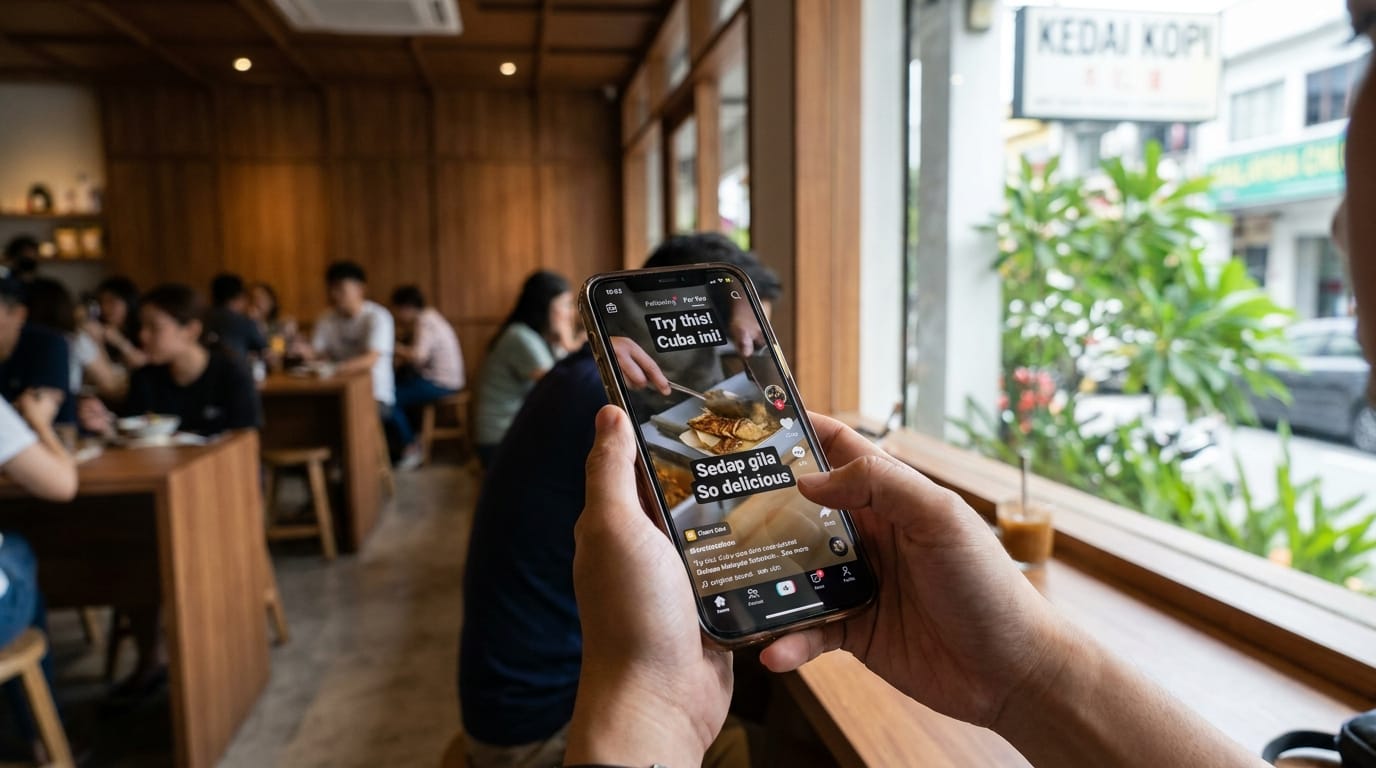
- Content marketing in Malaysia involves creating valuable, locally relevant content like videos and blog posts to attract customers through search engines and social media.
- It generates three times more leads than outbound marketing at a 62% lower cost, making it the highest-ROI strategy for Malaysian SMEs.
- Video is dominant, with 78% of all digital marketing in Malaysia in 2026 being video content, prioritising platforms like TikTok and Instagram Reels.
- Localisation through festive themes (Ramadan, CNY), cultural context, and bilingual captions is critical for achieving high engagement and sharing rates.
Content marketing in Malaysia is the practice of creating valuable, locally relevant content, such as blog posts, short-form videos, and case studies, that attracts Malaysian customers through Google search and social media platforms like WhatsApp and TikTok. It generates three times more leads than outbound marketing at 62% lower cost, making it the most effective, highest-ROI strategy for Malaysian SMEs in 2026.
This approach moves beyond traditional advertising, which often interrupts potential customers. Instead, it focuses on building trust and authority by answering the specific questions your audience is already asking online. For Malaysian businesses, this means creating assets that serve the customer first, establishing the brand as a credible resource and guiding them towards a purchase decision.
Define Content Marketing for Malaysian SMEs
At its core, content marketing is the creation and distribution of assets that provide value to a target audience. These assets can include blog articles, videos, infographics, case studies, or social media posts. The goal is not immediate sales but to build a long-term relationship with potential customers.
This strategy is particularly effective for SMEs in Malaysia because it allows them to compete with larger players without a massive advertising budget. By focusing on a specific niche and consistently producing helpful content, a small business can become the go-to authority, attracting organic traffic and qualified leads over time. It is an investment in a brand’s digital presence, not a short-term campaign expense.
Match Content to Malaysian Platforms
The Malaysian digital landscape has a clear favourite: video. An estimated 78% of all digital marketing in Malaysia in 2026 is video content, with a heavy emphasis on short-form formats. This requires a platform-specific content strategy, as what works on TikTok will not necessarily perform well on a corporate blog.
Different platforms serve different stages of the customer journey. A successful content marketing strategy in Malaysia uses a mix of formats to guide customers from initial awareness to final purchase.
| Platform | Primary Content Type | Best Use Case for Malaysian SMEs |
|---|---|---|
| TikTok / Instagram Reels | Short-form video (under 60s) | Awareness & community building via trends and quick tips |
| Google Search / Blog | SEO blog posts (2/week) | Lead generation & trust building via detailed answers |
| WhatsApp / Facebook | Before-and-after & testimonial videos | Community retention & direct sales via sharing |
Repurpose content across platforms. A detailed blog post can be broken down into several short-form videos, a carousel post for Instagram, and a discussion topic for a Facebook Group.
Build a Practical Content Calendar
Consistency is the engine of any successful content marketing strategy. A content calendar removes guesswork and ensures a steady stream of valuable information for your audience. For a Malaysian SME, a practical calendar can be built in four steps.
Identify Core Themes: List the top five to ten problems your customers face. These themes become your content pillars, ensuring everything you create is relevant. For a local accounting firm, themes could be “SME tax filing,” “MyInvois integration,” and “payroll management.”
Choose Primary Platforms: Do not try to be everywhere at once. Start with one platform for deep engagement (e.g., a blog for SEO) and one for broad awareness (e.g., TikTok). Focus your resources on mastering these channels first.
Set a Realistic Cadence: A sustainable schedule is better than an ambitious one that leads to burnout. The Malaysian SME Fixgure, for example, maintains a cadence of two SEO blog posts, four to five social media posts, and one short video per week.
Plan for Festive Seasons: Block out major Malaysian holidays like Ramadan, Chinese New Year, Deepavali, and Merdeka Day well in advance. Content that aligns with these cultural moments significantly outperforms generic messaging.
See Real Content Marketing Examples in Malaysia
Theory is useful, but seeing a content marketing strategy in action provides clarity. Local brands that succeed do so by understanding their audience’s needs and cultural context, not by simply copying global trends.
One clear example is the approach taken by the local SME Fixgure. The company demonstrates a strong, consistent content marketing strategy by publishing two SEO blog posts per week that answer specific customer questions, complemented by four to five social content pieces and one short weekly video that showcases results. This multi-format approach builds authority through search while engaging the community on social media.
Another powerful tactic used by numerous Malaysian brands is aligning campaigns with festive seasons. Brands that incorporate local storytelling and relevance for Ramadan, Chinese New Year, Deepavali, or Merdeka Day consistently achieve stronger watch-through and sharing rates. This cultural attunement shows the audience that the brand understands the local market on a deeper level.
Measure Your Content Marketing ROI
Measuring the return on investment (ROI) for content marketing goes beyond tracking direct sales. The value lies in its ability to influence the entire customer journey. A proper measurement framework for a content marketing strategy in Malaysia should track metrics across three key areas.
- Awareness: Is the content reaching the target audience? Key metrics include website traffic from organic search, social media reach and impressions, and video views.
- Engagement: Is the audience finding the content valuable? This is measured by likes, comments, shares, time spent on a page, and newsletter sign-ups. High engagement signals that the content resonates.
- Conversion: Is the content driving business goals? Track metrics like form submissions for e-books, demo requests, and, ultimately, sales that can be attributed back to a specific piece of content.
Avoid Common Content Strategy Mistakes
Many Malaysian SMEs attempt content marketing but fail to see results due to a few common, avoidable errors. Diagnosing these mistakes is the first step toward building a strategy that works.
Ignoring Local Nuance: Using generic, global content is a critical mistake. Success in Malaysia requires content that reflects local culture, uses bilingual captions where appropriate, and acknowledges festive seasons.
Inconsistent Publishing: Posting content sporadically kills momentum. An audience cannot be built without a reliable and consistent publishing schedule.
Focusing Only on Sales: Content that constantly pushes a product will be ignored. The primary goal should be to provide value and solve problems. Trust is built by helping, not just by selling.
Neglecting Distribution: Creating great content is only half the battle. Without a plan to distribute it through social media, email marketing, and other channels, even the best article or video will fail to find an audience.
A successful content marketing programme requires a balanced approach. It combines a deep understanding of SEO in Malaysia with creative social media marketing to ensure assets are both discoverable and engaging.
Conclusion
For Malaysian SMEs, content marketing is no longer a “nice-to-have” but a core business function for sustainable growth. By creating valuable, locally relevant content, businesses can build trust, generate high-quality leads, and establish lasting relationships with customers at a fraction of the cost of traditional advertising. The data is clear: a well-executed content strategy delivers powerful, measurable results.
Principle: Create value for the customer first, and the business results will follow.
To develop a content marketing strategy in Malaysia that drives real growth, contact our team for a strategic consultation.
Sources
- Fixgure: “Content Marketing Malaysia 2026 — Complete Strategy Guide to …” (2026)
- Screendragon: “How to Build a Content Marketing Strategy in 7 Steps (With Examples)” (2026)
- Forbes: “Content Marketing: The Ultimate Guide for 2026 – Advisor – Forbes” (2026)
- Zenweb: “Content Marketing 101: How One Blog Brings Customers – ZenWeb” (2026)
- Theknowledgeacademy: “20 Types of Content Marketing to Use for Success in 2026” (2026)
- Mailchimp: “What is Content Marketing and does it still work in 2026? – Mailchimp” (2026)
- Yotpo: “User-Generated Content 2026: 9 Tips To Master Strategy – Yotpo” (2026)
- Business: “Marketing predictions & guide for 2026 – Think with Google” (2026)
Want to put this into practice?
Our team builds and optimises MarTech stacks for enterprise brands across Malaysia and APAC.