Key Takeaways
- A recent study shows 69% of Malaysian shoppers, including those in the high-income T20 group, abandon their carts due to delivery fees.
- The resistance is psychological. Consumers perceive shipping fees as a penalty, not a service cost, creating disproportionate friction at checkout.
- Marketplaces like Shopee and Lazada have conditioned consumers to expect shipping subsidies, setting a high bar for direct-to-consumer (D2C) brands.
- Sustainable strategies involve setting intelligent thresholds, offering product bundles, and providing transparent cost information early in the customer journey.
For brands operating in Malaysia’s digital economy, the data on free shipping in Malaysia presents a stark reality. A seemingly minor delivery fee is a major obstacle to conversion, responsible for a staggering 69% of cart abandonment across all income levels. This includes the T20 segment, confirming that the issue is not one of affordability but of behavioural psychology.
While Malaysia’s digital payment infrastructure is expanding rapidly, with Bank Negara Malaysia reporting that retail e-payment transactions grew 19% to RM831 billion in 2025, this checkout friction point remains. For CMOs and digital leaders, understanding and addressing this consumer behaviour is not optional. It is a critical component of a successful e-commerce strategy.
Acknowledge the Psychology of ‘Painful’ Fees
The resistance to a RM6 shipping fee is not logical, it is psychological. This phenomenon is rooted in the concept of loss aversion, where the pain of losing something (in this case, money for a non-product fee) is felt more intensely than the pleasure of gaining something of equal value.
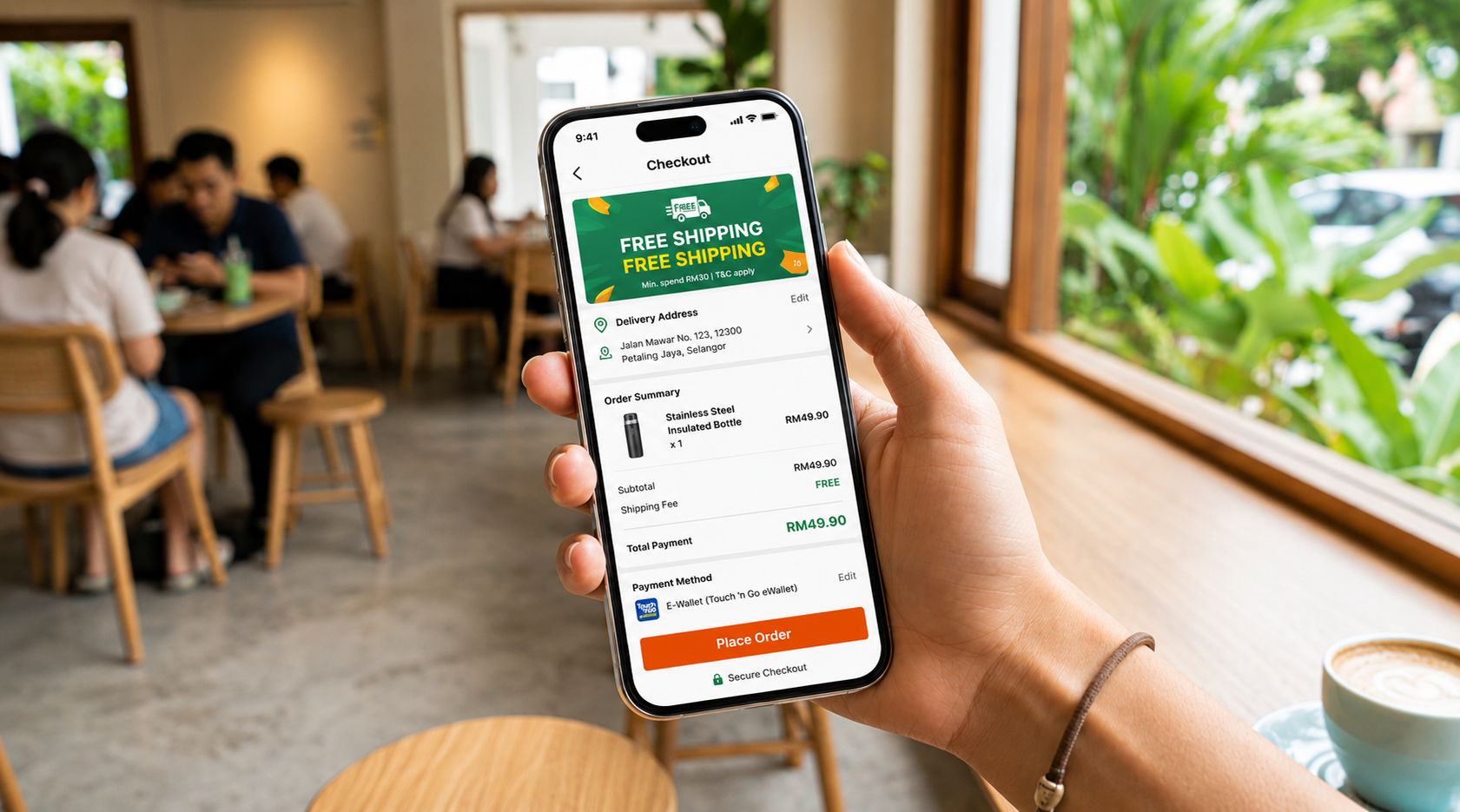
When a customer adds a RM100 item to their cart, they have accepted its value. A surprise RM6 fee at checkout feels like a separate, last-minute penalty. It breaks the flow of the transaction and forces a re-evaluation of the total cost, often leading to abandonment.
Analyse Local Marketplace Standards
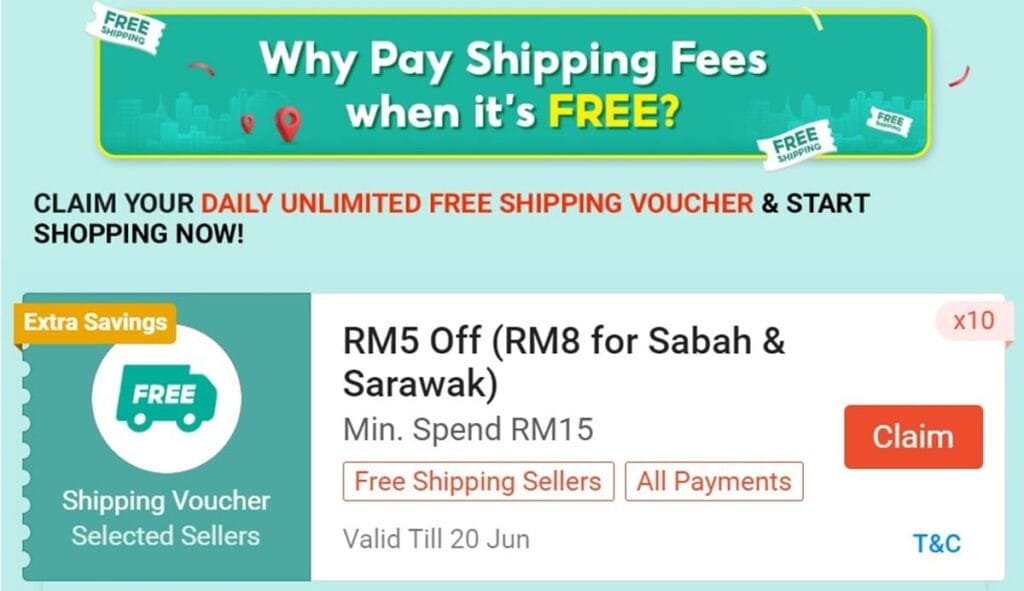
Dominant platforms like Shopee and Lazada have profoundly shaped consumer expectations. They frequently use vouchers and campaign-based subsidies to offer free or heavily discounted shipping, usually tied to a minimum spend.
These marketplaces have trained Malaysian consumers to hunt for shipping deals. D2C brands must recognise this environment. Competing directly with a blanket “always free” policy may be financially unsustainable.
Instead, the focus should be on creating intelligent, profitable subsidy models.
The Real Cost of Free Shipping in Malaysia: A Margin Analysis
Offering free shipping in Malaysia is not without cost. The expense must be absorbed somewhere, either by increasing product prices or accepting lower profit margins. A poorly planned shipping policy can severely damage profitability, especially for businesses with low average order values (AOV).
The correct approach is to model the financial impact. Leaders must compare the cost of subsidising shipping against the revenue lost from cart abandonment. This calculation reveals the break-even point and helps define a threshold that protects margins while still encouraging conversion.
Pro tip: Display the amount needed to qualify for free shipping directly in the cart. A message like, “You are RM15 away from free delivery!” encourages customers to increase their basket size.
Prioritise Transparency at Every Touchpoint
A significant part of the negative reaction to shipping fees comes from the element of surprise. Discovering an unexpected cost on the final checkout page feels deceptive and erodes trust.
To mitigate this, organisations should:
- Show potential delivery costs on product detail pages or via a shipping calculator in the cart.
- Free Shipping on Orders Over RM150.
- If free shipping applies only to certain regions or product categories, this information must be easily accessible.
Move Beyond Blanket Subsidies
A one-size-fits-all approach to shipping is inefficient. A segmented and flexible strategy allows brands to control costs while meeting customer expectations.
Implement Strategic Thresholds
The most common tactic is setting a minimum order value to qualify for free shipping. This encourages customers to add more items to their cart, increasing the AOV. The threshold should be set slightly above the current AOV to nudge behaviour without creating an unattainable goal.
Offer Product Bundles
Bundling products is an effective way to absorb shipping costs. By creating curated sets or “buy two, get one” offers, the perceived value of the purchase increases, making the total price (which now implicitly includes shipping) more palatable.
Provide Click-and-Collect Options
For brands with a physical presence, offering free in-store pickup is a powerful alternative. It completely removes the shipping fee as a point of friction and can drive additional foot traffic, creating opportunities for in-store upselling.
Testing and Optimising Your Free Shipping Malaysia Offer
A shipping strategy should not be static. It requires continuous testing and refinement based on performance data. Brands should experiment with different models to find what works best for their audience and business model.
Shipping Model | Primary Benefit | Key Consideration | Best For |
|---|---|---|---|
Threshold-Based | Increases Average Order Value (AOV) | Threshold must be carefully calibrated | Most D2C brands |
Flat Rate | Simple and predictable for customers | Can deter small-order customers | Businesses with uniform product sizes |
Membership-Based | Builds loyalty and repeat purchases | Requires a compelling value proposition | Brands with high purchase frequency |
Time-Limited Offer | Creates urgency and boosts sales | Can train customers to wait for promos | Driving sales during key campaigns |
Watch out: A blanket free-shipping policy can attract low-margin, single-item orders that erode profitability over time.
Track the Metrics That Actually Matter
Optimising a shipping strategy requires looking beyond the top-line conversion rate. Key performance indicators (KPIs) provide a more complete picture of the policy’s impact.
- Cart Abandonment Rate: The primary metric for measuring checkout friction.
- Average Order Value (AOV): Shows if thresholds are successfully encouraging larger purchases.
- Profit Margin Per Order: Ensures that shipping subsidies are not destroying profitability.
- Customer Lifetime Value (CLV): Determines if free shipping contributes to long-term loyalty.
By analysing these metrics, digital leaders can make data-informed decisions that balance customer acquisition with sustainable growth. The goal is to transform shipping from a logistical cost centre into a strategic marketing investment.
Conclusion
The Malaysian consumer’s sensitivity to shipping fees is a defining feature of the local e-commerce landscape. Ignoring it leads directly to lost revenue. However, a reactive, unprofitable “always free” policy is not the answer.
The most effective approach is strategic, transparent, and data-driven.
By understanding the psychology at play and implementing flexible, well-communicated shipping policies, brands can reduce cart abandonment and build a more resilient e-commerce operation.
The principle is clear: manage the perception of the fee, not just the fee itself.
For a deeper dive into optimising your customer journey and conversion funnels, our team at OpenMinds Group is available to discuss bespoke solutions.