- What It Is: The e-invoice mandate in Malaysia requires businesses to issue and receive invoices that are electronically validated by the Inland Revenue Board (LHDN) through its MyInvois platform.
- Who Is Affected: The mandate is being phased in. It started with the largest companies in August 2024 and will apply to all businesses with annual revenue over RM1 million by 2026.
- Core Function: An e-invoice is not just a PDF. It is a digital file (XML or JSON) sent to LHDN for real-time validation before it is shared with the customer, creating a digital record for tax purposes.
- Why It Matters: Compliance is mandatory for tax deductions. Non-compliance can lead to rejected expense claims and significant penalties, impacting cash flow and financial reporting.
The e-invoice mandate in Malaysia is a government requirement for businesses to issue invoices that are validated in real-time by the Inland Revenue Board (LHDN) via the MyInvois platform. This new system replaces traditional paper or PDF invoices for official tax purposes, aiming to improve tax transparency and efficiency. For Malaysian SMEs, this represents a fundamental shift in billing, accounting, and compliance processes.
According to the government’s MyDIGITAL plan, 92% of Malaysian businesses are expected to adopt digital payment and e-invoicing solutions by 2026. This move is not just about compliance; it is a critical step in the nation’s digital economic transformation, affecting over 2.5 million SME entities. Understanding the rules and timeline is essential for a smooth transition.
Define the LHDN E-Invoice Mandate
At its core, the LHDN e-invoice system requires businesses to submit invoice data to the government for approval before sending it to the customer. Once LHDN validates the invoice, it returns a digitally signed version with a unique identification number. This validated e-invoice is the only version considered legally valid for claiming tax deductions.
This process ensures that LHDN has a real-time record of business transactions, reducing the potential for tax evasion and simplifying tax audits. For businesses, it standardises the invoicing process and creates a clear, indisputable digital paper trail for all sales and purchases.
Follow the Phased Implementation Timeline
The rollout of the e-invoice in Malaysia is staggered based on a company’s annual turnover. This phased approach gives smaller businesses more time to adapt.
| Annual Turnover | Mandatory From | Status |
|---|---|---|
| > RM100 million | 1 August 2024 | In Force |
| > RM25m. RM100m | 1 January 2025 | In Force |
| > RM5m. RM25m | 1 July 2025 | In Force |
| > RM1m. RM5m | 1 January 2026 | Upcoming |
| ≤ RM1m | Currently Exempt | Not Required |
For businesses in the RM1m. RM5m bracket, while penalties for non-compliance are deferred until 31 December 2027, the mandatory issuance date of 1 January 2026 remains. Failing to issue validated e-invoices from this date could risk the rejection of tax deductions, even during the penalty-free period.
Compare E-Invoices to Standard Invoices
It is crucial to recognise that an e-invoice is fundamentally different from a PDF or digital invoice that businesses currently use. The key distinction lies in the LHDN validation step.
- Standard Invoice (e.g., PDF): Created by the seller and sent directly to the buyer. LHDN only sees it during a tax audit.
- E-Invoice (MyInvois): Created by the seller, sent to LHDN for validation first, and only then sent to the buyer with an official validation link.
An e-invoice contains more mandatory data fields than a typical invoice, including the Taxpayer Identification Numbers (TIN) of both the seller and the buyer, and a detailed breakdown of items.
Assess the Impact on Business Operations
The e-invoice mandate affects more than just the finance department. Marketing agencies and service-based SMEs must reconsider their billing practices, especially for retainers and pass-through costs like advertising spend.
Previously, an agency might consolidate a month’s ad spend from Google or Meta into a single line item on a client invoice. Under the new rules, any single transaction of RM10,000 or more must be issued as an individual e-invoice. This rule applies immediately with no grace period, meaning consolidated billing for large expenses is no longer compliant.
Find MyInvois-Ready Accounting Software
To streamline the e-invoicing process, businesses should use accounting software that integrates directly with the LHDN MyInvois system. Many popular providers have updated their platforms for the Malaysian market.
Key MyInvois-ready software options include:
- Xero: A global cloud accounting platform with updated features for Malaysian e-invoicing compliance.
- QuickBooks Online: Another major international player that supports LHDN requirements.
- Deskera: A cloud-based solution popular with SMEs in Southeast Asia, offering direct MyInvois integration.
- SQL Accounting: A well-known Malaysian software provider that has released a dedicated MyInvois module.
- AutoCount: Another local favourite that provides integrated e-invoicing solutions for SMEs.
Using integrated software automates the submission and validation process, reducing the risk of manual errors and saving significant time.
Issue Your First E-Invoice: A Step-by-Step Process
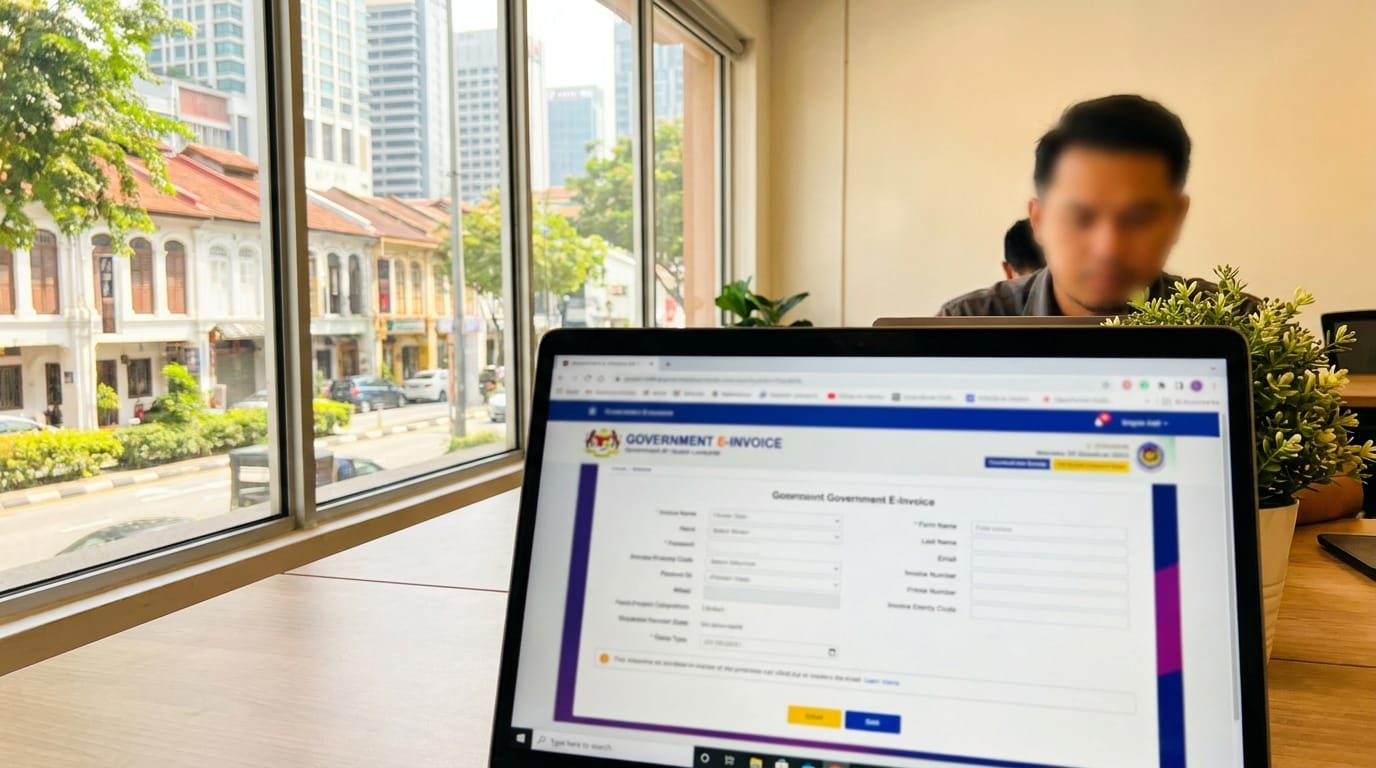
For businesses not using integrated software, LHDN provides a free MyInvois Portal. Here is a simplified overview of the process:
Log In: Access the MyInvois Portal using your company’s digital certificate.
Create Invoice: Manually enter all required invoice details, including your TIN, the buyer’s TIN, item descriptions, quantities, and prices.
Submit for Validation: Send the invoice data to LHDN through the portal. The system will perform a real-time check.
Receive Validation: If successful, LHDN returns a validated e-invoice with a QR code and a unique ID number. This process usually takes seconds.
Share with Buyer: Send the validated e-invoice (often as a PDF with the embedded QR code) to your customer for payment.
Avoid Common E-Invoice Implementation Mistakes
As with any new regulation, there are common pitfalls. Avoiding them is key to a smooth transition.
- Incorrect TIN: Using the wrong or an invalid Taxpayer Identification Number for either the seller or buyer will cause the invoice to be rejected instantly. Always verify the buyer’s TIN before issuing.
- Missing Mandatory Fields: An e-invoice requires 53 mandatory fields. Incomplete submissions will fail validation.
- Improper Consolidation: As mentioned, consolidating multiple large transactions into one invoice is a frequent error. Any single expense over RM10,000 must have its own e-invoice.
- Delayed Rejection Handling: If an invoice is rejected by the buyer, a credit note or a new e-invoice must be issued through the MyInvois system within 72 hours.
Consult your accountant or tax advisor to ensure your business processes are fully compliant. This article provides guidance, not official legal or financial advice.
The transition to the e-invoice Malaysia system is a significant operational change, but it is also an opportunity to digitise and streamline financial workflows. By understanding the requirements, choosing the right tools, and preparing processes in advance, Malaysian SMEs can ensure compliance and build a more efficient foundation for growth. Real results come from proactive adaptation, not last-minute fixes.
For businesses seeking to align their operational and marketing strategies with these new digital realities, contact our team.
The core principle: Treat e-invoicing not as a tax burden, but as a catalyst for digital operational excellence.
See how this works in practice in our OpenMinds case studies.
E-invoicing is one piece of a much larger shift. For the national picture, see our full report on where digitalization in Malaysia actually stands in 2026, including the Budget 2026 grants SMEs can claim.
Sources
- MDEC: “National Digitalisation Plan 2026” (2024)
- Lembaga Hasil Dalam Negeri (LHDN): “e-Invoice Implementation Timeline” (2024)
- Grant Thornton Malaysia: “Updated e-Invoice Specific Guideline” (2026)
- JomeInvoice: “Phase 4 e-Invoice Deadline Extended to January 2028” (2026)
Want to put this into practice?
Our team builds and optimises MarTech stacks for enterprise brands across Malaysia and APAC.