Key Takeaways
- Owned Audience: Email provides a direct communication channel to an owned audience, offering more stability and control than social media algorithms.
- Automation at Scale: Behavioural triggers and automated flows allow for timely, personalised communication that drives conversions without manual labour.
- Mobile-First Design: With most Malaysians reading emails on their phones, responsive, single-column layouts are non-negotiable for engagement.
- PDPA Compliance: Building a list requires explicit consent under Malaysia’s Personal Data Protection Act 2010, making ethical data capture a priority.
While social media and messaging apps capture headlines, email marketing in Malaysia remains one of the most powerful channels for building long-term customer relationships and driving revenue. It is not an outdated tactic. It is a strategic asset for any organisation aiming to convert interest into loyalty.
Unlike rented audiences on social platforms, an email list is an owned, first-party data asset. This direct line of communication is critical for nurturing leads, recovering abandoned sales, and fostering repeat business, all while respecting customer privacy and consent.
Build Your List Ethically
The foundation of successful email marketing is a high-quality, engaged list built on trust. Malaysian businesses must prioritise compliance with the Personal Data Protection Act 2010 (PDPA), which governs the collection and use of personal data. This means obtaining clear, explicit consent.
A common strategy is to offer a lead magnet (e.g., an e-book, a checklist, a webinar recording) in exchange for an email address.
- Website Pop-ups: Use intelligently timed pop-ups or slide-ins to offer a discount or exclusive content to new visitors.
- Post-Purchase Opt-ins: Invite customers to subscribe to marketing updates on the order confirmation page. This is a high-intent moment.
- Social Media Links: Use a link-in-bio tool on Instagram or a call-to-action on Facebook to direct followers to a newsletter sign-up page.
Pro tip: Always use a double opt-in process. This sends a confirmation email to new subscribers, ensuring the address is valid and the user genuinely wants to receive communications.
Choose the Right Platform
Selecting an email service provider (ESP) depends on business needs, technical expertise, and budget. For Malaysian businesses, the choice often comes down to scalability and e-commerce integration.
| Platform | Best For | Free Tier Limit | Automation Strength | E-commerce Fit |
|---|---|---|---|---|
| Mailchimp | Beginners, Content Creators | 500 contacts, 1,000 sends/month | Basic | Moderate |
| Brevo | SMEs, All-in-One Marketing | 9,000 sends/month | Good | Good |
| Klaviyo | E-commerce, D2C Brands | 250 contacts, 500 sends/month | Excellent | Excellent |

Automate the Customer Welcome
A welcome sequence is the first, and most important, automation to implement. It capitalises on the moment a new subscriber is most engaged. A simple three-part series can set the stage for a long-term relationship.
- Email 1 (Immediate): Deliver the promised lead magnet or discount code. Confirm the subscription and briefly introduce the brand’s core promise.
- Email 2 (Day 2): Share the brand story, highlight best-selling products, or provide valuable educational content related to the brand’s niche.
- Email 3 (Day 4): Present a soft call-to-action. This could be an invitation to follow on social media, read a popular blog post, or browse a specific product category.
Implement Essential Automation Flows
Beyond the welcome series, several automated email flows, or “journeys,” are critical for driving revenue and retention. These are triggered by specific user behaviours, ensuring the message is always relevant and timely.
- Abandoned Cart: Reminds a customer about items left in their online shopping cart. A series of two or three emails sent over 48 hours is highly effective.
- Post-Purchase: Follows up after a sale to thank the customer, provide shipping information, request a review, or suggest complementary products.
- Customer Win-Back: Targets subscribers who have not opened or clicked an email in a set period (e.g., 90 days) with a special offer to re-engage them.
- Festive Campaigns: Pre-built sequences for major Malaysian holidays like Hari Raya or Chinese New Year can be scheduled to run automatically, saving time during busy periods.
Perfect Your Email Marketing Strategy in Malaysia
Local context is key to making an impact. A generic approach will not resonate with Malaysian consumers. Success requires a deep understanding of local behaviour and preferences.

Design for Mobile Inboxes
According to Shopify Malaysia, email designs must be mobile-first. This means using single-column layouts, large fonts, clear call-to-action buttons, and optimised images that load quickly on mobile data connections. Every email should be tested on a mobile device before sending.
Localise Subject Lines and Content
Language choice matters. Depending on the target audience segment, subject lines in Bahasa Malaysia, English, or a mix (“Manglish”) can significantly improve open rates. The content should also reflect local nuances, values, and interests.
Time Sends for Malaysian Audiences
Sending emails at the right time increases the chance they will be seen. Common high-engagement periods in Malaysia include:
- Lunch breaks (12 PM – 2 PM)
- Evening commutes (5 PM – 7 PM)
- Late evenings (9 PM – 11 PM)
- Payday weeks (end of the month)

Measure What Truly Matters
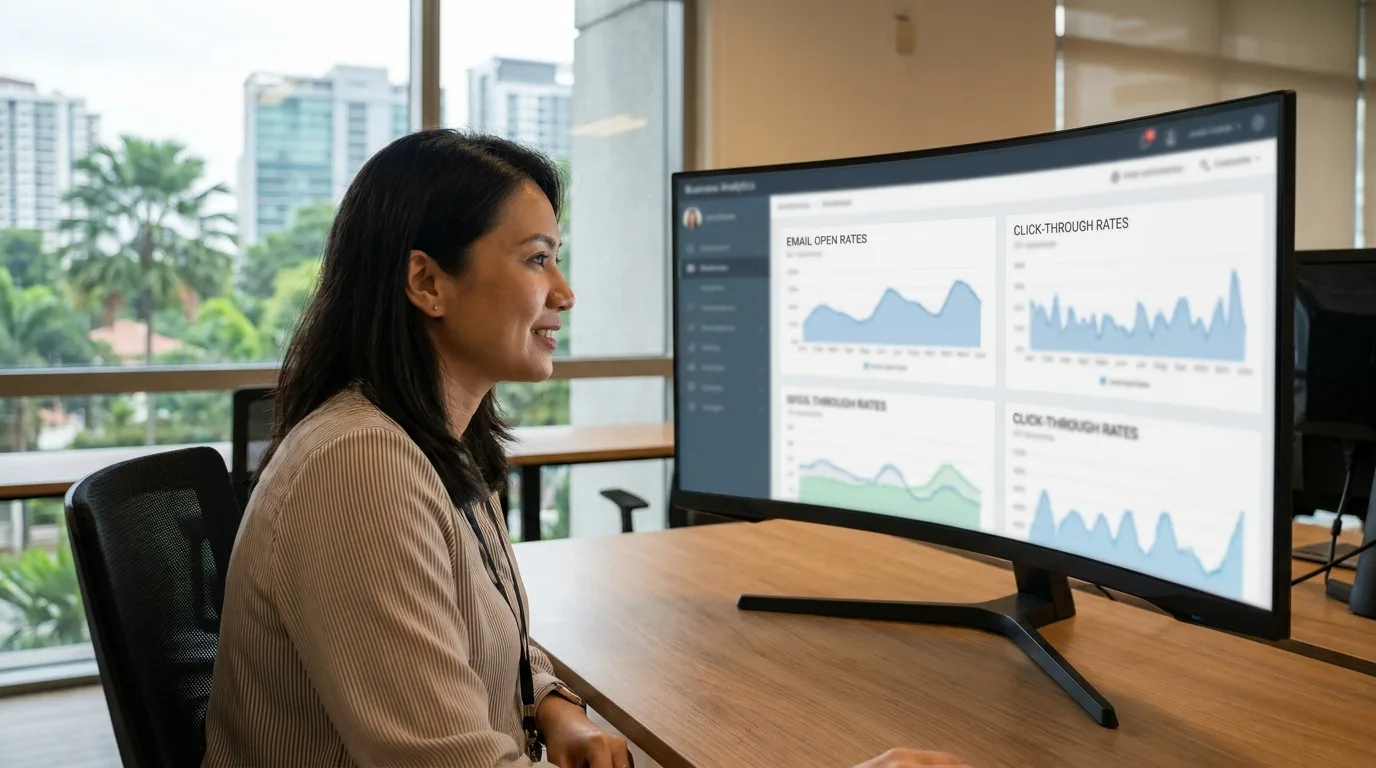
Historically, open rates were a primary KPI. However, with privacy changes like Apple’s Mail Privacy Protection, open rates are becoming less reliable. Upland Software notes that modern email marketers should focus on deeper engagement metrics.
Watch out: An obsession with open rates can lead to misleading conclusions. Instead, prioritise metrics that signal genuine interest and intent. These include click-through rates, conversion rates, unsubscribe rates, and list growth rate. These figures provide a clearer picture of an email programme’s health and its contribution to business goals.
Email marketing is not about broadcasting messages to a massive, faceless list. It is about building a system of personalised, automated conversations that guide customers through their lifecycle. When executed with a focus on value, consent, and local context, it becomes an organisation’s most dependable engine for growth.
The core principle: Treat every inbox as an invitation for a one-to-one conversation.
For a deeper analysis of how these strategies can be tailored to your organisation’s specific needs, contact our team at OpenMinds Group.