
Key Takeaways
- A product with just five reviews is 270% more likely to be purchased than one with none, demonstrating a clear conversion threshold.
- Perfect 5.0-star ratings can appear less credible to savvy consumers than ratings between 4.0 and 4.7 stars.
- Negative reviews, when addressed professionally, can increase a brand’s perceived authenticity and build customer confidence.
- Trust signals like “Verified Purchase” badges and user-submitted photos significantly boost the credibility of a review.
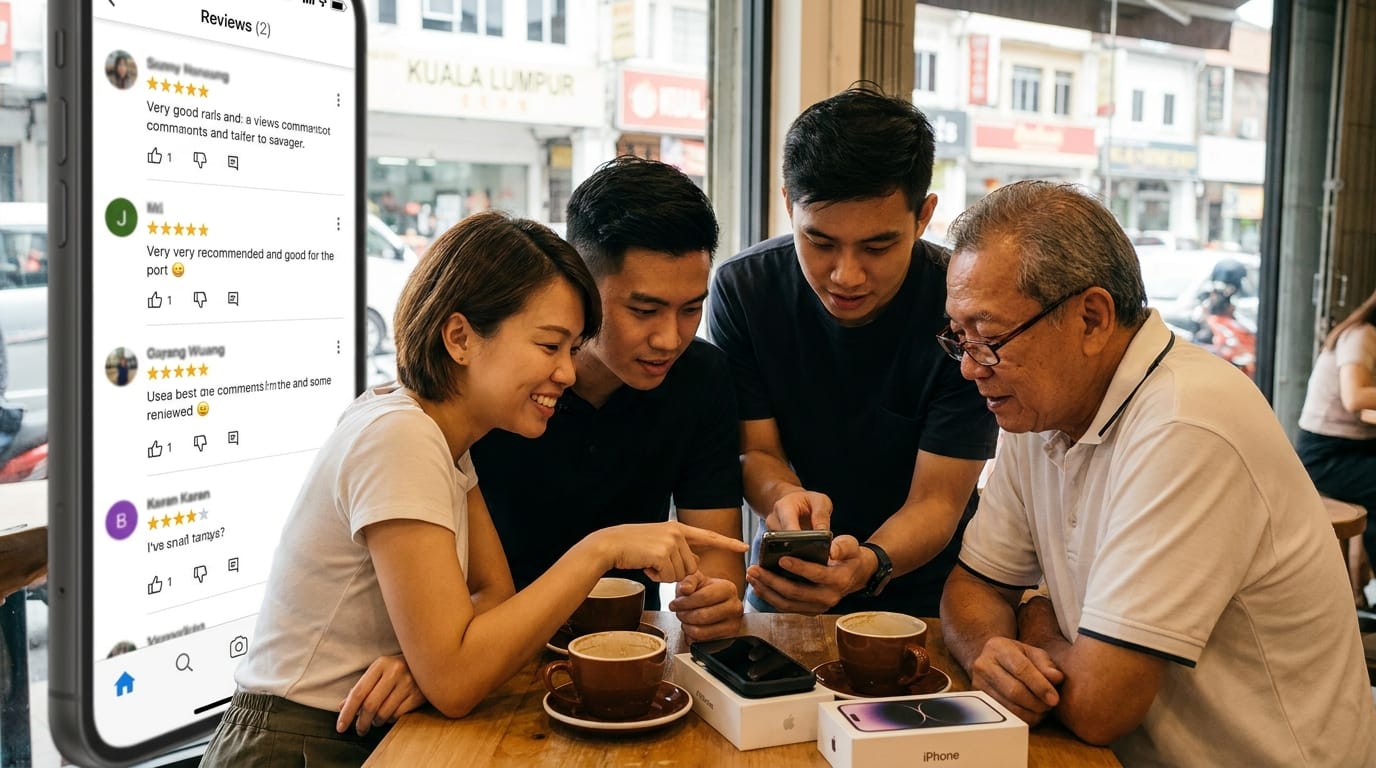
For Malaysian consumers, the path to purchase is paved with the opinions of others. The reliance on online reviews in Malaysia for building trust is not just a trend; it is a fundamental part of modern e-commerce behaviour. With 76% of consumers regularly reading reviews for local businesses, this “review reflex” has become a critical checkpoint before any transaction.
This behaviour forces brands to move beyond simply accumulating positive feedback. They must now manage a complex ecosystem of social proof where authenticity, detail, and even imperfection play vital roles. Understanding this dynamic is essential for any organisation aiming to capture the Malaysian digital market.
Understand the Review Count Threshold
The first hurdle for any product is visibility, and reviews are the catalyst. A product with zero reviews exists in a high-risk grey area for potential buyers. Research from the Spiegel Research Centre shows that a product with as few as five reviews is 270% more likely to be purchased than one with no reviews.
This highlights a critical psychological tipping point. The initial set of reviews provides the foundational social proof needed to overcome consumer inertia. While conversion rates continue to rise with more reviews, the most significant leap happens with the first few.
| Number of Reviews | Approximate Conversion Lift | Key Implication for SMEs |
|---|---|---|
| 0 Reviews | Baseline | Product is perceived as high-risk or new. |
| 5 Reviews | +270% | The most critical threshold to cross for initial trust. |
| 50+ Reviews | Moderate additional lift | Gains diminish, focus should shift to quality. |
Aim for Imperfect Authenticity
Conventional wisdom suggests that a perfect 5.0-star rating is the ultimate goal. However, data reveals a more nuanced reality. Purchase likelihood actually peaks for products with average ratings between 4.0 and 4.7 stars.
A flawless rating profile can trigger suspicion among experienced online shoppers. They may assume the reviews are fake, curated, or that the sample size is too small to be meaningful. A slightly imperfect score, peppered with some 3-star or 4-star feedback, feels more genuine and representative of a real-world experience.

Identify What Makes a Review Real
Credibility is not just about the star rating. Certain signals communicate authenticity more effectively than others, directly impacting the online reviews Malaysia trust equation.
Prioritise Verified Purchases
A “Verified Purchase” badge is a powerful endorsement. It confirms the reviewer has legitimate, first-hand experience with the product or service. This simple marker can improve purchase odds by 15% because it eliminates the suspicion of fabricated or competitor-driven reviews.
Encourage User-Generated Content
Visuals add a layer of undeniable proof. Encourage customers to upload photos or videos with their reviews. This is especially effective in categories like:
- Clothing and shoes (27% of consumers watch video reviews)
- Food (27%)
- Gadgets and electronics (26%)
Marketplaces like Shopee and Lazada have integrated this feature effectively, allowing buyers to see products in a real-world context, not just in polished studio shots.

Systematise Your Review Collection
Waiting for reviews to appear organically is a slow and unreliable strategy. Instead, organisations should implement a systematic, non-intrusive process for requesting feedback.
Pro tip: Time your review requests carefully. An email or app notification sent 7-14 days after delivery gives the customer enough time to use the product properly, leading to more detailed and helpful feedback.
Respond Strategically to All Feedback
How a brand responds to criticism is a public demonstration of its customer service ethos. A negative review is not a disaster; it is a trust-building opportunity. A prompt, professional, and helpful public response can often win over prospective customers who witness the interaction.
A strategic response framework includes these steps:
- Acknowledge and Thank: Start by thanking the customer for their feedback, regardless of its tone.
- Apologise and Empathise: Express regret that their experience did not meet expectations. Show you understand their frustration.
- Take it Offline: Offer a direct contact channel (email or phone number) to resolve the specific issue privately. This prevents a lengthy, public back-and-forth.
- Keep it Professional: Avoid defensive language. The goal is resolution, not winning an argument.
Turn Social Proof into Marketing Assets
Customer reviews are a valuable source of marketing copy. They provide authentic, benefit-driven language that resonates with new audiences.
Pull compelling quotes and specific positive points from 4-star and 5-star reviews. Feature them directly on product detail pages, in social media advertisements, and in email marketing campaigns. This reinforces key value propositions using the customer’s own voice.
Uphold Malaysian Consumer Law
When building a review strategy, legal and platform compliance is non-negotiable. In Malaysia, the Consumer Protection Act 1999 prohibits misleading representations. This has direct implications for how businesses handle reviews.
Watch out: Never offer incentives for exclusively positive reviews or suppress negative ones. Such practices, known as “review gating,” can be seen as deceptive and may violate both national regulations and the terms of service of platforms like Google, Shopee, or Lazada. Transparency is the best defence.
Ultimately, mastering the dynamics of online reviews in Malaysia and building trust requires a shift in perspective. It is not about chasing a perfect score. It is about fostering an authentic, transparent, and responsive feedback loop that gives consumers the confidence to click “buy”.
Authenticity, not perfection, is the cornerstone of trust in the digital marketplace.
If your organisation needs to develop a more sophisticated approach to customer feedback and social proof, contact our team at OpenMinds Group to discuss bespoke solutions.