- Pay for Results: Performance marketing is a digital advertising model where businesses only pay when a specific, measurable action (like a click, lead, or sale) is completed.
- Action vs. Awareness: Unlike brand marketing, which builds long-term awareness, performance marketing focuses on driving immediate, trackable conversions and revenue.
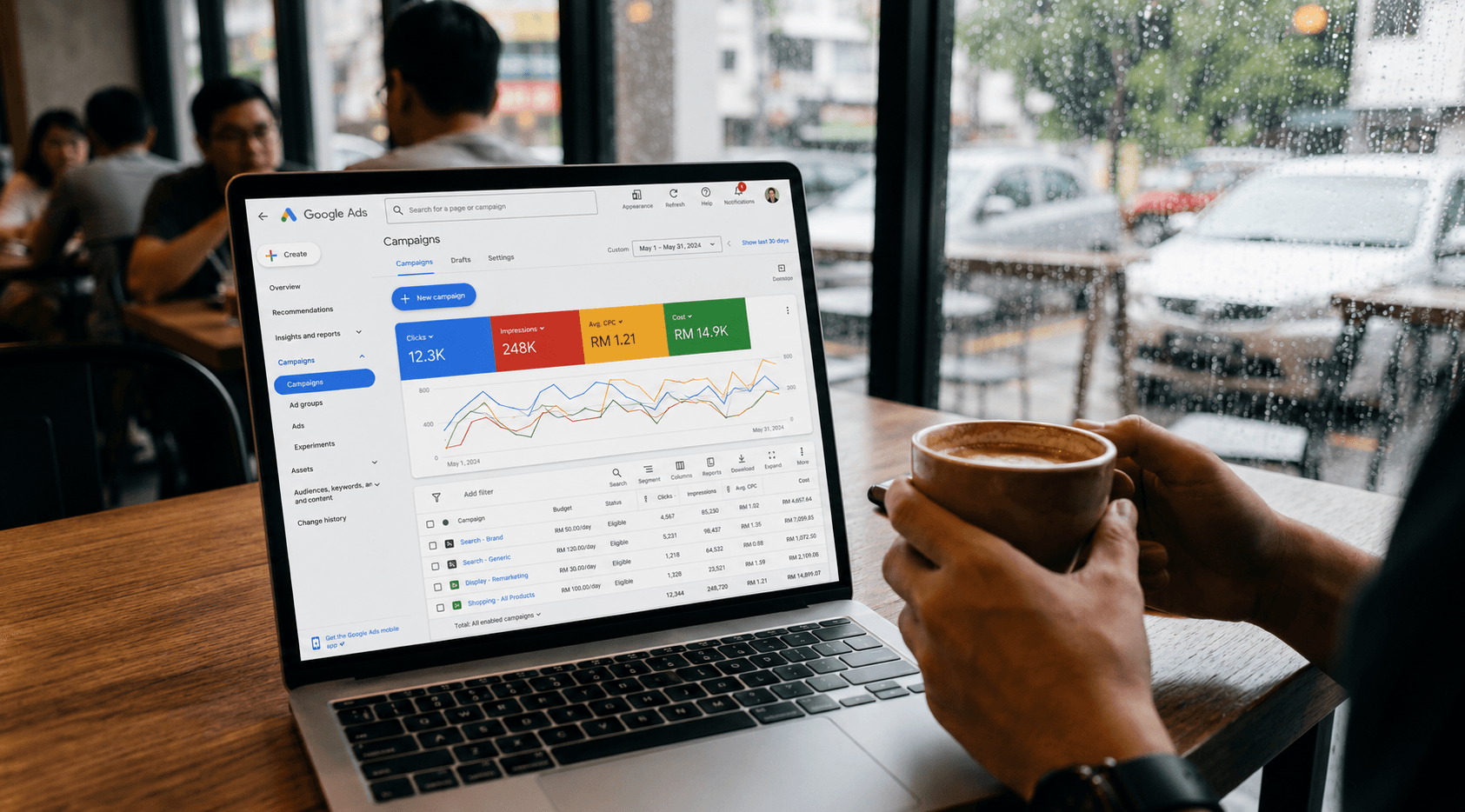
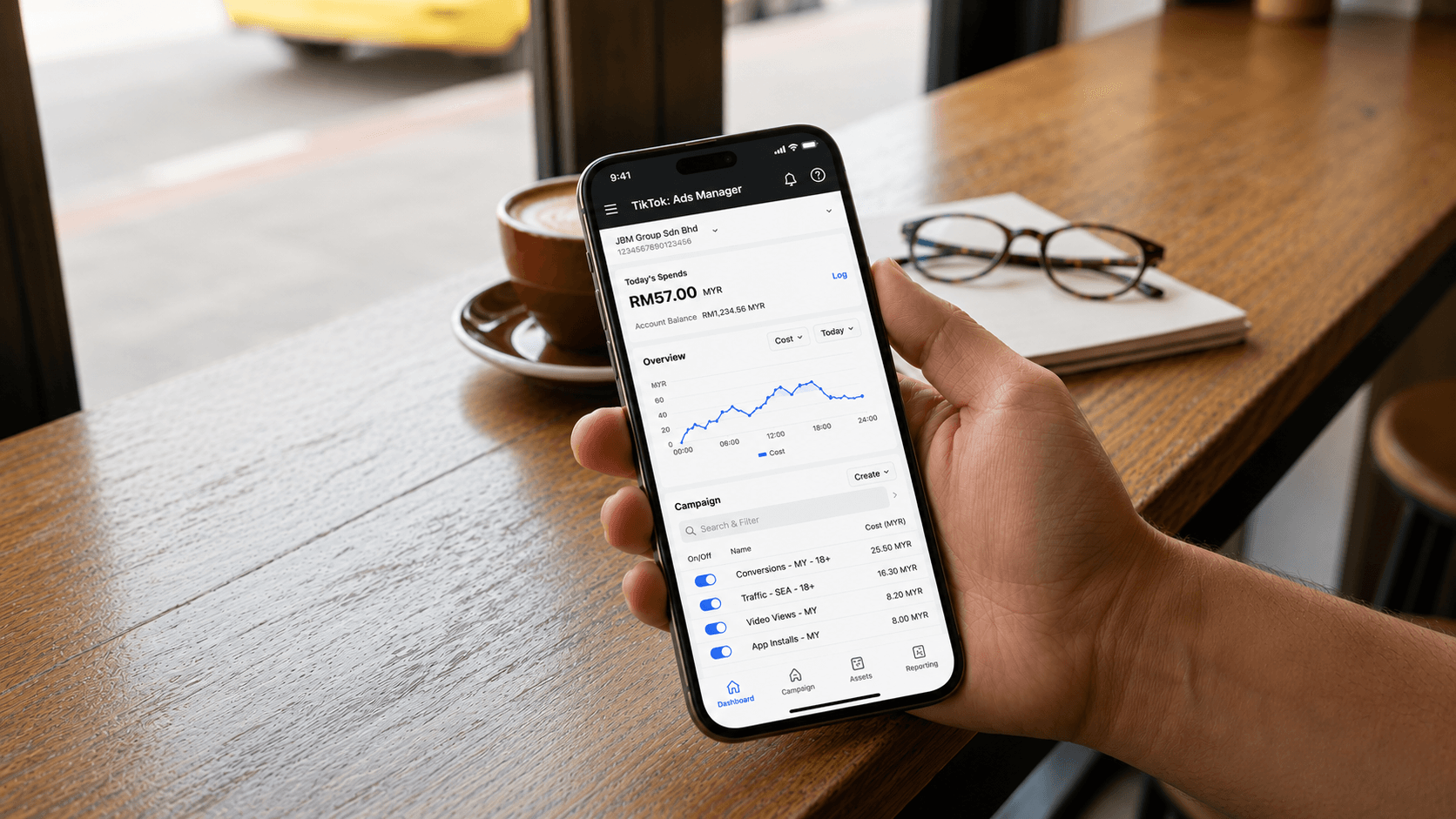
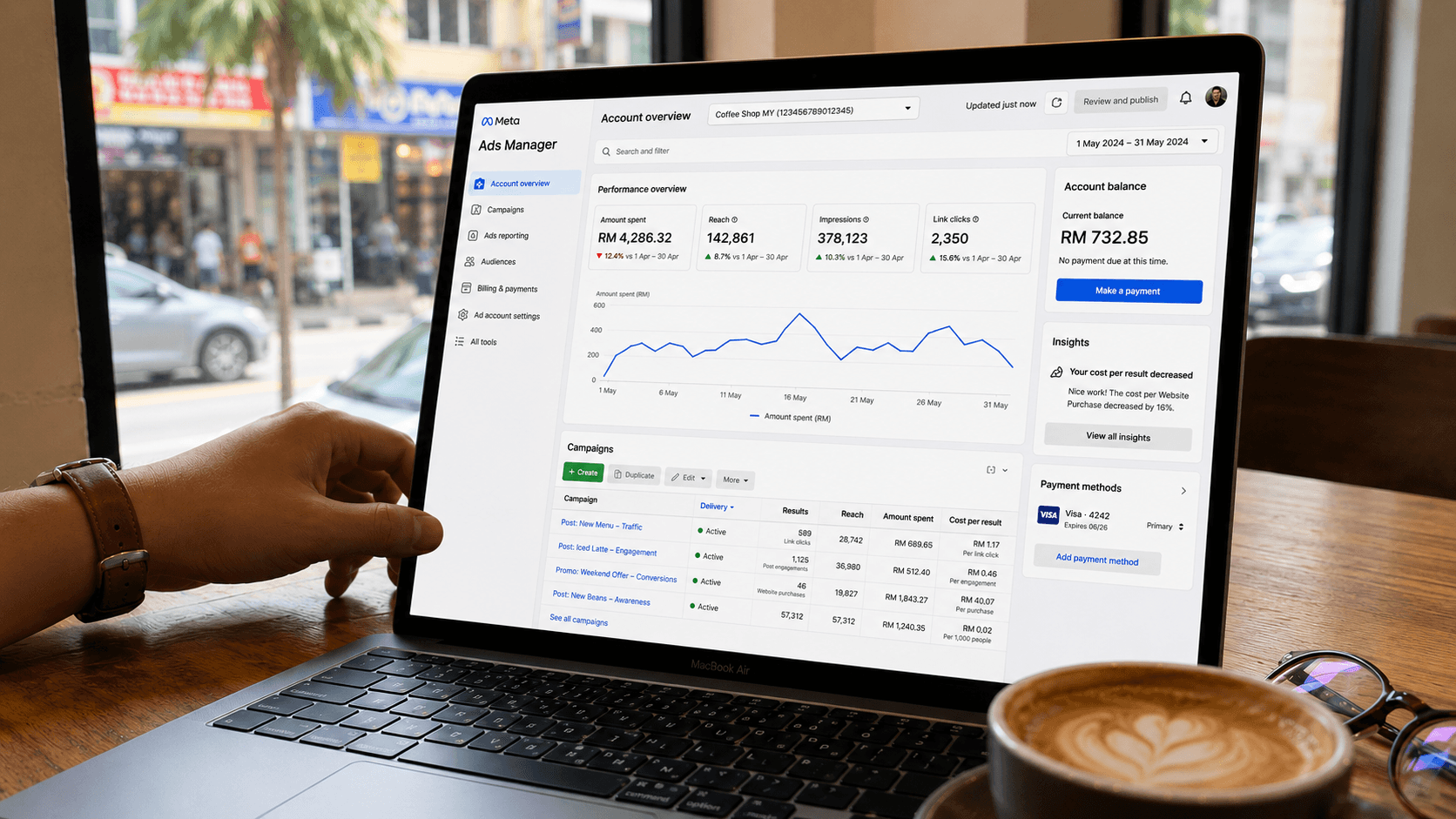
- Core Channels: For Malaysian SMEs, the most effective channels include Google Ads, Meta Ads (Facebook and Instagram), TikTok Ads, affiliate marketing, and targeted email campaigns.
- Essential KPIs: Success is measured with clear metrics like Cost Per Lead (CPL), Return on Ad Spend (ROAS), and Customer Acquisition Cost (CAC).
Performance marketing is a results-driven digital strategy where advertisers pay only when specific, measurable actions are achieved. These actions can be clicks, leads, or sales, effectively shifting the financial risk from the brand to the advertising partner and enabling precise tracking of return on investment (ROI). This model stands in contrast to traditional brand marketing, which prioritises long-term awareness and is often measured by less tangible metrics like impressions.
For Malaysian small and medium-sized enterprises (SMEs), this approach makes digital advertising more accessible and accountable. Instead of paying a flat fee for an ad placement and hoping for results, businesses invest directly in the outcomes that fuel growth. It transforms marketing from a cost centre into a measurable driver of revenue.
Define the Core Difference: Performance vs. Brand Marketing
The fundamental distinction between performance and brand marketing lies in their objectives and payment models. Performance marketing is transactional and short-term, focused on generating a direct response. Brand marketing is relational and long-term, aimed at building recognition, trust, and loyalty over time.
An SME might use brand marketing to sponsor a local community event to build goodwill. It would use performance marketing to run a Google Ad that charges only when a potential customer clicks through to its website to request a quote.
| Factor | Performance Marketing | Brand Marketing |
|---|---|---|
| Payment Trigger | After action (click, lead, sale) | Before ad runs (flat fee) |
| Primary Goal | Conversions, revenue | Awareness, sentiment |
| Measurability | High (trackable KPIs) | Low (impressions, surveys) |
| Time Horizon | Short-term (days to weeks) | Long-term (months to years) |
| Risk Profile | Low (pay-for-performance) | High (pre-paid placement) |
Identify Key Performance Marketing Channels
Malaysian SMEs have several powerful channels to choose from. The key is to select platforms where their target audience is most active and engaged. The rapid growth of certain platforms, like TikTok Ads which saw 32% year-on-year growth in Malaysia in 2024, highlights the need to stay current.
| Channel | Primary KPI | Avg. Cost (Malaysia 2024) | Best For SME Use Case |
|---|---|---|---|
| Google Ads | CPA / ROAS | RM50 to RM105 per lead | B2B, high-intent search users |
| Meta Ads | CPL / ROAS | RM25 to RM65 per lead | B2C, social engagement, retargeting |
| TikTok Ads | CPI / CPL | RM17 to RM42 per lead/install | Youth-focused brands, app installs |
| Affiliate Marketing | CPS / ROAS | 10% to 20% commission per sale | E-commerce, scalable sales |
| Email (Performance) | CAC / ROI | RM2 to RM8.50 per lead | Customer retention, low-cost scaling |
Track the Right KPIs for Digital Ads
Effective performance marketing depends entirely on tracking the right metrics. Without data, it is impossible to know what is working. For Malaysian SMEs, a few key performance indicators (KPIs) are critical for measuring success and making informed budget decisions.
A 2024 survey revealed that 74% of Malaysian SMEs report that cost-per-lead (CPL) is their top KPI for evaluating digital ad effectiveness.
Cost Per Lead (CPL): This measures how much it costs to acquire one new lead or prospect. It is calculated by dividing the total ad spend by the number of leads generated. A lower CPL indicates a more efficient campaign.
Return on Ad Spend (ROAS): This is the most important metric for profitability. It measures the amount of revenue generated for every ringgit spent on advertising. A ROAS of 3x means that for every RM1 spent, the business generated RM3 in revenue.
Customer Acquisition Cost (CAC): This metric calculates the total cost to acquire a new paying customer. It includes not just ad spend but also other sales and marketing costs, providing a holistic view of acquisition efficiency.
Build a Performance Marketing Strategy for SMEs
A successful strategy is more than just launching ads. It requires a structured approach that connects spending to business goals.
Set Clear, Measurable Goals
Before spending a single ringgit, define what success looks like. Is the goal to generate 50 qualified leads per month, drive 100 online sales, or achieve a 4x ROAS? A specific, measurable goal provides a clear target for campaign optimisation.
Know Your Audience and Channels
Data shows that 68% of Malaysian consumers expect personalised digital experiences. This means understanding customer demographics, interests, and online behaviour is crucial. Use this knowledge to select the channels where they are most likely to convert.
Create Compelling Offers and Landing Pages
The ad’s job is to earn the click. The landing page’s job is to secure the conversion. A high-performing ad leading to a slow, confusing, or irrelevant landing page will waste money. Ensure the page is mobile-friendly, loads quickly, and has a clear call-to-action that matches the ad’s promise.
Continuously A/B test elements like headlines, images, and button text on landing pages. Small changes can lead to significant improvements in conversion rates.
When Should an SME Start Performance Marketing?
While powerful, performance marketing is not a magic bullet. Launching campaigns too early, before the business is ready, can lead to wasted ad spend.
A business is ready for performance marketing when it has:
- A validated product or service with proven customer demand.
- A clear understanding of its unit economics (profit margin per sale).
- A functional website or landing page designed to convert visitors.
It is likely too early if the business is still refining its core product, has no defined target customer, or lacks a basic online presence to handle incoming traffic and leads.
Answering Key Questions on Performance Marketing
For business owners new to this area, a few questions come up frequently.
What does a performance marketer do?
A performance marketer is a data-driven specialist who plans, executes, manages, and optimises digital advertising campaigns to achieve specific action-based goals. Their daily work involves analysing campaign data, adjusting bids, testing creative assets, and reporting on key metrics like CPL and ROAS.
How much should a new SME spend?
There is no single answer, but the best approach is to start small, test, and scale. A modest initial budget of RM1,000 to RM3,000 is often enough to gather initial data on one or two channels. This allows the business to identify what works before committing a larger portion of its marketing budget.
What is a good ROAS in Malaysia?
While it varies significantly by industry and profit margins, the average ROAS for the Malaysian SME sector is around 2.8x. However, a “good” ROAS is any figure that proves profitable for the specific business after accounting for all costs.
Conclusion
Performance marketing provides Malaysian SMEs with a transparent and accountable way to grow. By focusing on measurable actions and optimising for ROI, businesses can turn their advertising budgets into predictable revenue streams. It levels the playing field, allowing smaller companies to compete effectively by paying only for the results that matter.
Performance marketing turns advertising from an expense into a measurable investment.
To see how these principles deliver real results, explore our case studies. If you are ready to build a data-driven strategy for your business, contact our team to discuss a tailored approach.
Sources
- Impact: “What is Performance Marketing? The types, benefits, and KPIs – Impact” (2026)
- Unity: “What is Performance Marketing – Unity” (2026)
- Madisonlogic: “What Is Performance Marketing and Why It’s More Important Than Ever” (2025)
- Salesforce: “What is Performance Marketing & How Does it Work? – Salesforce” (2025)
- Business: “Performance marketing – What it is, how to measure, and channels.” (2025)
- Geeksforgeeks: “Performance Marketing : Meaning, Types, Strategy, Benefits &” (2025)
- Mailchimp: “What is Performance Marketing? – Mailchimp” (2022)
- Iab: “PDF defining performance marketing – in today’s digital landscape – IAB” (2026)
Want to put this into practice?
Our team builds and optimises MarTech stacks for enterprise brands across Malaysia and APAC.