- Integrated Campaigns Win: Successful World Cup 2026 marketing in Malaysia combines broadcast, streaming, prizes, and physical events into a single, cohesive customer experience.
- Experiential is Key: Brands without official rights can still capture attention by creating memorable, in-person experiences like live screenings, pop-ups, and themed events.
- Emotion Beats Sponsorship: Connecting with local match-day rituals and telling relatable stories often generates more engagement than simply displaying an official logo.
- Legal Safety is Non-Negotiable: FIFA aggressively enforces its trademarks. Brands must use safe, generic phrases like “football season” to avoid legal issues.
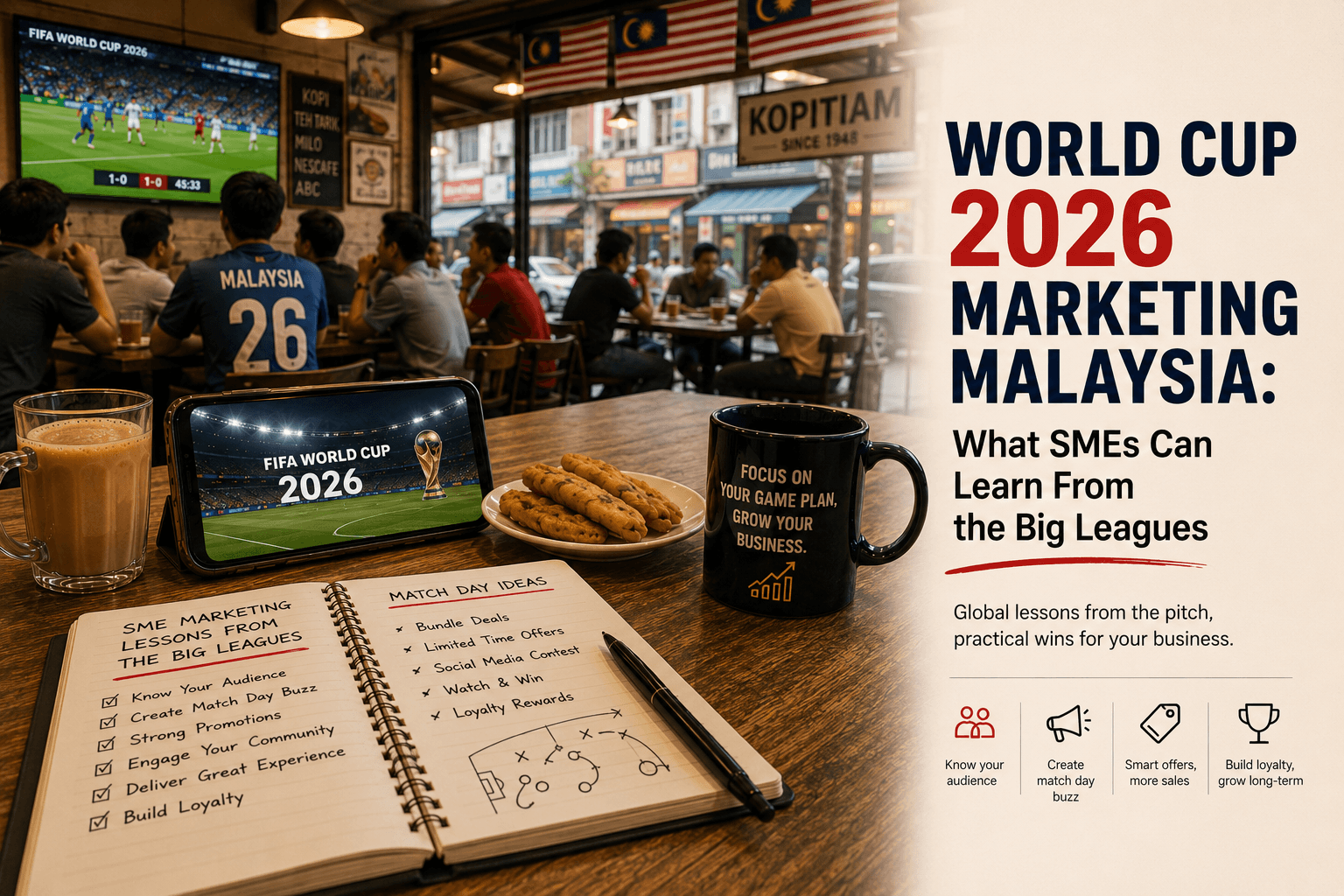
Effective World Cup 2026 marketing in Malaysia is driven by layered, integrated campaigns that blend broadcast sponsorship, free streaming, experiential events, and storytelling rooted in local match-day rituals. This approach allows brands to capture the tournament’s excitement without relying solely on expensive official FIFA rights. SMEs can adopt this model by focusing on budget-friendly experiential marketing, tying promotions to the broader “football season,” and prioritising emotional connections.
The tournament, with its 104 matches, represents a massive opportunity for audience engagement. A recent report found that 68% of Malaysian consumers engage more with brands that tie promotions to major sports events. The key is to move beyond simple advertising and create a holistic brand experience that resonates with the passion of football fans.
Build a Layered, Integrated Campaign
The most impactful World Cup campaigns connect multiple touchpoints. They do not just run a TV ad; they create an ecosystem where broadcast, digital, and physical activations reinforce each other.
U Mobile’s 2026 campaign is a prime example. As an official broadcast sponsor on RTMKlik, it launched a multi-pronged strategy:
- ULTRA Football Pass: Offered free streaming of all 104 matches for subscribers, removing a key barrier for fans.
- ULTRA Football Fest: A contest with high-value prizes like Samsung home bundles and official jerseys, driving subscriptions and engagement.
- ULTRA Dream Football Tour: An all-expenses-paid trip, serving as a powerful top-of-funnel attraction.
This integrated approach ensures the brand is present wherever the fan is, from the living room screen to their mobile device and in-store.
Pivot to Experiential Marketing
SMEs and brands without official sponsorship can win by creating tangible, in-person experiences. This strategy, known as experiential marketing, is planned by 52% of SMEs in Southeast Asia for major tournament campaigns in 2026. It shifts the focus from passive viewing to active participation.
Pavilion Bukit Jalil’s “Mega Kickoff” campaign demonstrates this perfectly. By hosting merchandise pop-ups and live screenings, it tied the excitement of the tournament to its retail environment. This approach is highly scalable for smaller businesses.
A local cafe can host match screenings, a boutique can create a football-themed window display, or a restaurant can offer special “match-day” menus.
Prioritise ROI Over Legacy Positions
For decades, Astro was the home of the World Cup in Malaysia. In 2026, it lost the broadcast rights as RTM and Unifi TV took over. While this may seem like a loss, it highlights a critical strategic lesson: ROI discipline beats defending a position out of habit.
Instead of entering a costly bidding war, brands can redirect those funds into more measurable, high-return activities. These could include targeted digital ads, influencer collaborations, or the kind of experiential events mentioned above. The goal is to connect with the audience, not just own the broadcast.
Connect with Local Match-Day Rituals
Official rights give a brand visibility, but emotional connection creates loyalty. Data shows 74% of Malaysian digital advertisers now prioritise emotional storytelling over media spend in sports campaigns. This means tapping into the unique ways Malaysians experience football.
Think about the pre-match gatherings at the mamak, the shared excitement in a family living room, or the friendly banter in a WhatsApp group. U Mobile’s hero film, which focused on these very rituals, resonated because it reflected the genuine experience of the fans. SMEs can do this by creating content that celebrates these local moments, using imagery and language that feels authentic to the Malaysian football fan.
Master World Cup Social Media in Malaysia
A strong social media presence is essential for any World Cup campaign. The strategy should go beyond just posting match scores.
Create a Content Stream: Develop a consistent flow of content throughout the tournament. This can include pre-match predictions, live-match commentary (without using official footage), and post-match analysis.
Foster Community: Use polls, quizzes, and user-generated content campaigns to get fans involved. Ask them to share photos of their match-day setups or their favourite football memories.
Leverage Video: Short-form video content on platforms like TikTok and Instagram Reels is perfect for capturing the high energy of the tournament. Create highlight reels (using original content), fan reaction videos, or behind-the-scenes looks at your own company’s football fever.
Partner with local micro-influencers or community football pages. Their authentic connection to a dedicated audience can provide more value than a single, expensive macro-influencer post.
Navigate FIFA’s Strict Trademark Rules
This is the most critical point for any brand running a World Cup campaign. FIFA protects its intellectual property aggressively. Using official branding without a licence can lead to serious legal consequences.
Unlicensed brands cannot use the phrases “FIFA World Cup 2026,” the official logos, or any imagery of teams and players.
To stay safe, use generic, descriptive terms that evoke the spirit of the event without infringing on trademarks.
| Legal Risk | Safe Phrase | Forbidden Term |
|---|---|---|
| Low | “football season” | “FIFA World Cup 2026” |
| Low | “the biggest tournament of 2026” | Official logos |
| Low | “summer of football” | Team/player imagery |
Create a Scalable SME Marketing Playbook
Not every business can afford a multi-million ringgit sponsorship. The good news is that effective strategies exist at every budget level. The key is to align tactics with resources and objectives.
| Campaign Type | Cost Level | Key Touchpoints | Best For | Example |
|---|---|---|---|---|
| Broadcast + Streaming + Prizes | High | TV, App, Social, In-store | Large brands | U Mobile |
| Experiential Pop-up + Live Screening | Medium | Physical Venue, Social, Local Ads | SMEs, Retailers | Pavilion Bukit Jalil |
| Content-Only (No Rights) | Low | Social, Web, Video | Cost-conscious brands | Nike (Global) |
For a Malaysian SME, the medium and low-cost options are most practical. A combination of a small-scale experiential event (like a live screening) supported by a strong, content-only social media campaign can deliver impressive results without a large budget.
Conclusion
The World Cup 2026 offers a powerful platform for brands in Malaysia to connect with a passionate and engaged audience. Success does not depend on having the biggest budget or the official FIFA logo. It depends on a smart, integrated strategy that blends digital engagement with real-world experiences and speaks to the heart of local fan culture. By focusing on authentic connection and navigating the legal landscape carefully, even the smallest SME can score a major marketing win.
Focus on the shared experience, not the official logo.
If your business is looking to build a winning marketing strategy for this football season or the next major event, contact our team to see how data-driven insights can help you connect with your audience.
See how this works in practice in our OpenMinds case studies.
Sources
- Forbes: “The 10 Smartest Marketing Moves Of The 2026 World Cup So Far” (2026)
- Umobile: “ULTRA Prizes Up For Grabs” (2026)
- KL Hapenings: “MEGA KICKOFF BRINGS MALAYSIA MEGA SALE 2026 TO PAVILION BUKIT JALIL: WHERE EVERY SHOPPING MOMENT SCORES BIG” (2026)
- My: “FIFA World Cup 2026™ – U.S. Embassy in Malaysia”
- Marketing Interactive: “Is this the best branding move at the 2026 FIFA World Cup?” (2026)
- Fifa: “Game Schedule & Where to Watch | FIFA World Cup 2026™”
- State: “FIFA World Cup 2026™ – United States Department of State” (2026)
- Digitalnewsasia: “digitalnewsasia.com”
- Bain: “bain.com”
- Datareportal: “datareportal.com”
Want to put this into practice?
Our team builds and optimises MarTech stacks for enterprise brands across Malaysia and APAC.